

With today’s complex systems the repair may involve more than running a diagnostic chart and replacing a defective part. Systems today are so connected that it makes it difficult for the most experienced technician to distinguish between a mechanical, electrical, fuel, or emission related condition without extensive testing. In addition to having the theory and diagnostic knowledge of the systems and components, the technician must be familiar with other conditions that can influence the operation of those systems, even though they may not be directly connected.
Electrical Interference
When multiple signals or frequencies interfere with electrical systems or components it is referred to as Radio Frequency Interference (RFI).
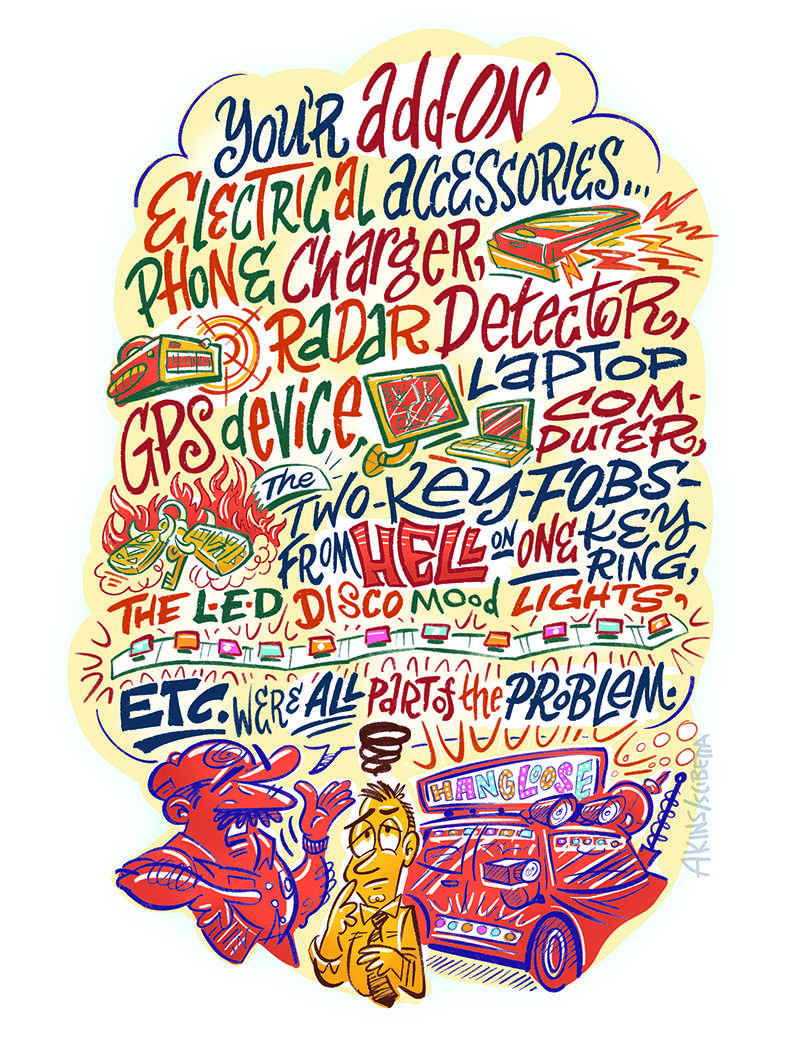
Computers programmed to read precise signal parameters may behave strangely when subjected to RFI. The symptoms may vary from a no-start, erratic idle, hesitation, stalling, erratic transmission shifting, misfires, flashing lights, etc. Potential sources of RFI include cell phone chargers, radar detectors, GPS devices, communication devices such as 2-way radios, laptop computers, electronic accessories, fluorescent lighting, electronic signage, high RFI traffic areas/gas station speed passes, immobilizer keys from other vehicles, access passes attached to a key ring, USB ports in use, etc. Add-on electrical accessories are a potential source of RFI. Multiple key fobs should never be attached to a single key ring. These are considerations the technician must include in their diagnosis. Be certain to question the customer concerning the recent addition of any add-on electrical devices.
Proper Connections
Loose or corroded connections can promote increased resistance affecting system or component voltage. Pay attention to the ground return circuits. Improper connections result in electrical system failure, systems behaving erratically, failure messages appearing in the instrument cluster, and fault codes stored in diagnostic memory. High resistance or intermittent connections resulting from terminal fretting can create some major issues with low voltage circuits. Terminal fretting is the result of micro-arcing between the male and female terminals within a connector. This condition is difficult to identify visually, but can often be corrected by disconnecting and reconnecting a connector. Often, terminal resistance related conditions that affect the system or component operation are not measurable with test instruments that are used daily in most repair shops.
Low Voltage and Electronic Components
A low voltage condition can create some major challenges with vehicle electronics. When this condition occurs, modules/ computers can stop communicating, creating some difficult-to-diagnose issues. Many hours of diagnostic time can be spent searching for a system or component failure when low voltage was the culprit. In addition to connection related issues, make battery and charging system testing a part of your diagnosis.
Add-On Accessories
Pay special attention to any electrical accessories that may have been added to the vehicle. Electrical accessories/devices plugged into the ALDL connector can result in electrical interference. When taking the vehicle in for service these devices are often unplugged or removed, thereby eliminating the symptoms. This leaves the technician chasing a problem that is no longer present.
Some detective work prior to the diagnostic process can save many labor hours and allow you to succeed where others have failed to accurately diagnose the complaint.
View PDF
Leave a Reply