
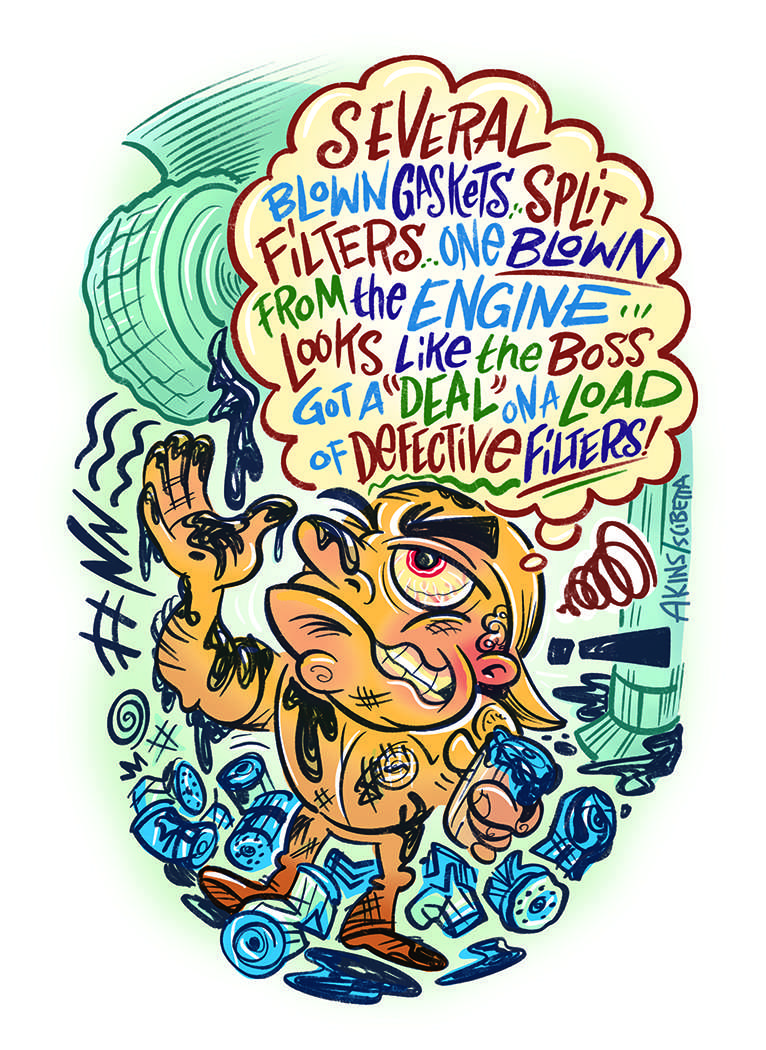
When filters bulge or split at the seam, gaskets protrude from their base plate and oil is dripping from the engine and chassis, the oil filter often gets the blame. Some install a second or third filter, convinced the filter is the culprit. The fact is the filter encountered overpressurization due to a stuck pressure regulating valve. The oil pump is operating on unfiltered oil, therefore any debris in the oil can restrict movement of the pressure regulating valve. These valves can stick and free almost immediately. This explains why installing a second filter may seemingly correct the overpressurization event. Engine oil pressure is determined by bearing clearances, oil viscosity, oil pump output and the pressure regulating valve within the pump, or in some cases positioned in the engine.
Some oil pumps are fitted with an electrical pressure regulating solenoid controlled by the PCM. These pumps are referred to as variable displacement/two stage pumps. When filters fail, some detective work is necessary to prevent a recurring failure. Installing another oil filter is not the solution.
Flow of Lubricant
When you consider the volume of lubricant flowing through an engine, it is obvious a minor leak can quickly lead to a catastrophic event. A typical oil pump will flow approximately 3-5 gallons of lubricant per minute. Some dual overhead cam high revving engines will flow as much as 12 gallons per minute. If you do the math that is 720 gallons per hour. Crankshaft driven oil pumps that turn at engine speed can result in pressures exceeding 700 psi if not regulated. Long before this pressure is reached, gaskets blow, filters become distorted, split at the seam or get propelled from the engine. Pressure exceeding 150 psi is of concern, as it has the potential to blow gaskets or deform the filter.
Filter Selection
Make certain the correct oil filter for the application is selected. Engine damage due to an incorrect filter installation is not warrantable. Follow the application guide and do not rely on interchange information when selecting a filter for the vehicle being serviced.
Filters of equal size often share different efficiency and capacity ratings. Efficiency is a measure of the percentage of particles of a determined size that the filter can capture. The capacity is the amount of debris the oil filter can hold before a pressure differential results in the by-pass valve opening, allowing unfiltered oil to flow through the engine. New lubrication technologies with increased flow rates result in higher pressure differentials across the filter media, requiring different by-pass rates. Installing a filter with a 15 psi by-pass valve on an application that requires a 22-25 psi by-pass valve will result in unfiltered oil flowing throughout the engine. This is especially an issue with the variable displacement pumps. Make certain that you follow the oil filter tightening specs to prevent gasket displacement.
A Second Pressure Regulation Valve
Low oil pressure complaints on GM vehicles equipped with Active Fuel Management may be the result of a sticking pressure regulating valve positioned in the oil pan, or a contaminated filter screen positioned beneath the oil pressure switch. The screen prevents contaminants from collecting in the valve lifter oil manifold and related solenoids. To determine which pressure regulating valve is malfunctioning will require two oil pressure readings at different locations, simultaneously. One pressure gauge will be positioned at the location of the oil filter via an adapter. The second gauge will be attached at the location of the oil pressure sensor. Space in this article will not allow a full description, which illustrates the necessary adapters, attachments and desired pressure readings. Mighty Tech Tip #204 “Low Oil Pressure Symptoms…New Technology Creates Diagnostic Challenges” will provide a complete description and procedure.
View PDF
Leave a Reply