
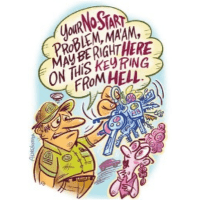
Intermittent no-start symptoms can be a challenge for the most experienced technician, while the solution may be hidden in plain sight. When Smart Keys/Fobs and Anti-Theft devices operate on frequencies that may be similar to other devices that may be transmitting simultaneously, interference with the signal strength to the body control module (BCM) may be impaired. When this condition occurs, the interference can result in a no-start symptom.
These conditions can be very difficult to pinpoint, as the same events that caused the symptom must be recreated. Unfortunately, the conditions are often intermittent, location-specific, or removed from the vehicle, making the diagnosis more challenging.
No Fob Detected – Weak Signal Strength
The symptom may include a No Fob Detected message when the Stop/Start button is depressed. The Anti-Theft Warning Light may be displayed, as the BCM cannot recognize the signal from the Stop/Start switch or key. The first consideration should be the condition of the fob battery. The fob should not be placed in an area where the signal could be impaired with RFI blocking material. This could include purses, briefcases or any material that may affect the RF signal strength.
With a No Fob message displayed, the vehicle can usually be started by placing the fob in a special slot/pocket identified by the vehicle manufacturer. This puts the fob in close proximity to an antenna that increases the signal strength.
Some vehicle manufacturers, such as Nissan, recommend placing the fob next to the Start/Stop button while depressing the button. Every vehicle owner should be aware of their vehicle manufacturer’s recommended procedure and specific location of the fob slot or starting procedure, as it is just a matter of time and location for these symptoms to occur.
Radio Frequency Transmission
The following systems use a radio frequency to operate certain systems or components. Interference with those components is referred to as Radio Frequency Interference, which results in an inoperative component or system. Customer complaints may involve any of the following:
1) No Fob Detected message
2) Keyless or passive entry/start inoperative
3) Insufficient or no remote keyless entry
4) Anti-theft light illuminated with fault codes stored
5) No-start symp-toms
6) Tire pressure monitor lamp illuminated and sen-sor codes stored. Some aftermarket accessory devices may interfere with the required signal strength for the system or component to function.
Devices That Could Promote Radio Frequency Interference
Monitoring/tracking devices attached to the ALDL connector, cell phones and chargers, computers, electrical devices, other vehicle immobilizer keys, keyless transmitters from other vehicles, toll passes, gate passes, parking access cards, fuel speed passes, pay at the pump stations, building access cards, radar detectors, 2-way radios, fluorescent lighting, electronic advertising signs, devices from other vehicles in close proximity, aftermarket LED lighting, USB power ports, etc.
Often a vehicle is brought in for service, and the problem has been removed by the vehicle owner by separating the fob from multiple devices/transmitters attached to the same key ring. Ask the vehicle owner if the fob/key arrangement currently with the vehicle is the unit in which the symptom occurred.
These are real world conditions that the technician must consider. They may have to turn devices on and off or remove add-on accessory devices to create or elimi-nate the events that caused the component failure.
View PDF
Leave a Reply